
Dr. phil. (USA) Eberhard Zangger
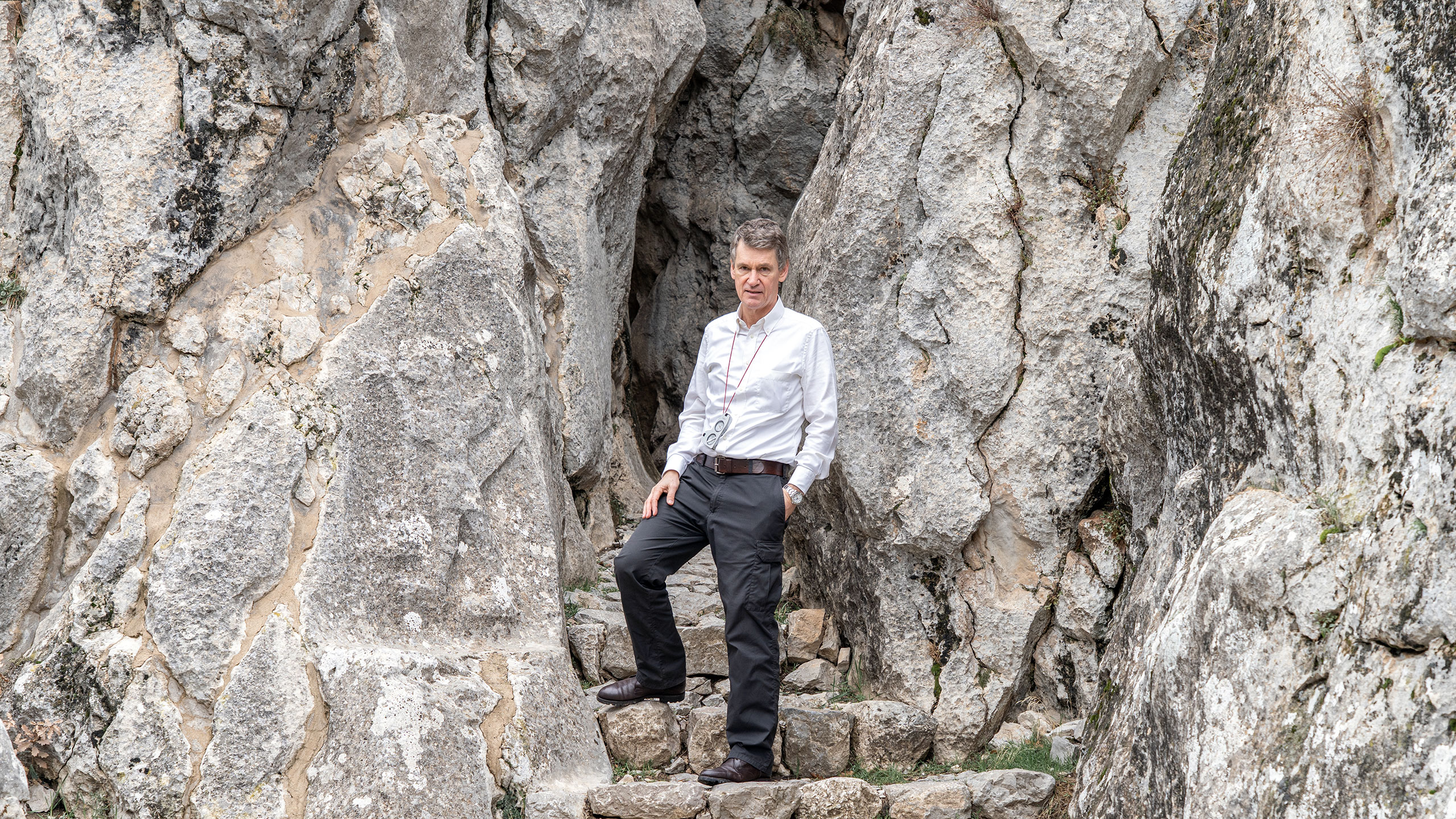
Dr. Eberhard Zangger is a German-Swiss geologist, archaeologist, and anthropologist whose research combines natural- and social-science methods to study early societies in the eastern Mediterranean region.
Zangger studied geology at Stanford University, where he earned his doctorate with a geoarchaeological thesis on the Argolid. This was followed by research stays at the University of Cambridge in the UK. In 2014, he co-founded Luwian Studies, an international non-profit foundation promoting research on Bronze Age cultures in Western Anatolia, which he has presided over since then. From 2020 to 2024, he completed a master’s degree in archaeology and anthropology at Harvard University to consolidate and extend his interdisciplinary approach with the latest findings and methods.
Zangger’s work lies on the intersection of landscape reconstruction, archaeology, and the interpretation of ancient texts. His research focuses on the long-term interactions between the natural environment and habitation, settlement patterns, and the significance of geographical factors for the development of Bronze Age societies.
Biography
Foundation Luwian Studies, Zurich, Switzerland
Co-founder and president | Media reports
Harvard University, Cambridge, United States
Studied archaeology and anthropology, Master of Liberal Arts (ALM)
University of Cambridge, Cambridge, United Kingdom
Senior Research Associate and Research Fellow, Clare Hall
Stanford University, Palo Alto, United States
PhD in Geology
Christian Albrecht University, Kiel, Germany
Studied geology and paleontology, master’s degree
German Mining Museum, Bochum, Germany
Worked as a technician
Preparator School, Bochum, Germany
Training as a geological preparator
Senckenberg Naturmuseum, Frankfurt, Germany
Training as a technical assistant for natural history museums and research institutes
This website provides an overview of Eberhard Zangger’s research and illustrates his integrative approach, which combines archaeological findings with geological, ecological, and historical methods.